
Creche & Nursery 1
The first steps: scribbling, pencil grip and mastery, early recognition of letters and numbers, and the development of gross motor skill. Language development runs through everything we do at this stage.
Faithfulness in Little Things
Three months old to eleven. Creche and Nursery, Kindergarten 1–3, and Basic 1 to Basic 5.
Everything that matters later is settled early: whether a child can concentrate, whether they will try something difficult, and whether they think of themselves as a reader. Our early years programme is built around those three things.
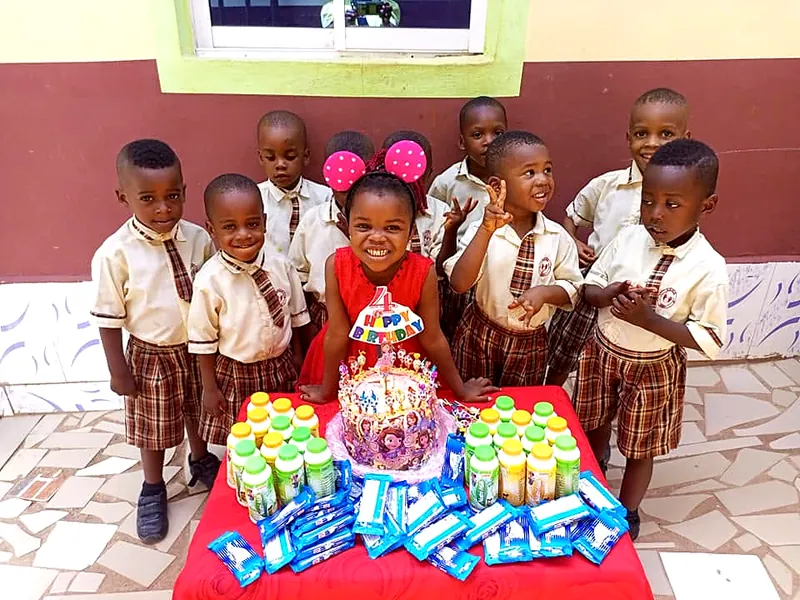
The method is Montessori. Children work with real materials at their own pace, and a teacher guides rather than drills. The content follows the Nigerian curriculum, so nothing a child needs for the next stage is missing. The result is that most of our children are reading by the age of four, and writing composition about their own environment by Kindergarten 3.
Running underneath all of it is practical life: pouring, sorting, buttoning, sweeping, caring for a shared space. For a three-year-old, this is the most important work of the day.
Class by class
Every stage has its own job. We do not move a child on until it is done.
The first steps: scribbling, pencil grip and mastery, early recognition of letters and numbers, and the development of gross motor skill. Language development runs through everything we do at this stage.
Fine motor skill develops. Children begin to read and write two-letter words and to work with numbers. Communication skill grows quickly, and children start to understand their environment and find their feet socially.
Children meet three-letter words and begin to read in earnest. By the end of the year they have mastered their numbers to one hundred.
Legible readers. Children at this stage can write a composition about the world around them, and are ready for the demands of Basic 1.
Reading and writing are fully developed, so the work opens out: etiquette, reading and writing, science and practical life. This is the stage where children are allowed to fly. We call them our high flyers.
Pupils leaving Basic 5 continue into our Secondary School — Junior Secondary through to SS 3 — already known to their teachers.
Secondary SchoolIn the nursery years
Nine strands, taught through materials and play rather than worksheets.
From Basic 1 the work opens out into etiquette, reading and writing, science and practical life — the point at which, as our Director of Academics puts it, the children are allowed to fly.
The full curriculum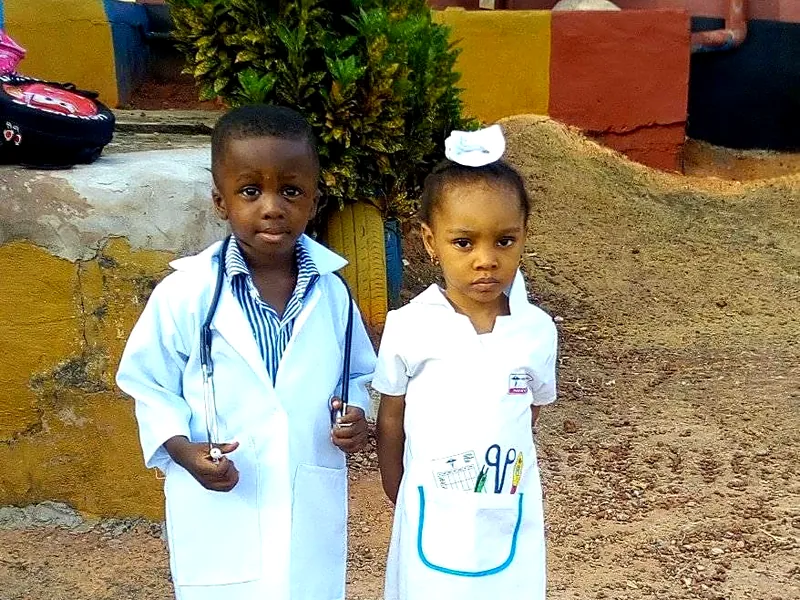
A day in the Early Years
Caregivers trained to watch over the children through the whole day, not only in lessons.
Accessible water for hand washing, with hygiene taught as a habit rather than a reminder.
A nurse and Red Cross personnel are assigned to the school.
Taught every day by a trained member of staff, from the youngest classes upward.
Complete the school’s online admission form and we will contact you about the entrance assessment.